The Mysteries of the Ancient World and the Craft of Novels
As I sit here working through the morning, with everything from Thomas Rhett to Will Smith on the playlist, I’m pondering how I might grow future books in the same way that my upcoming releases have made me grow.
For the novel Crown of the Orphic Queen, the overarching aspect of the story is the concept of the divine feminine, so instead of using just Orpheus at the end of each chapter in epigraphs, I also use sayings of Hecate, one of the original triple goddesses.
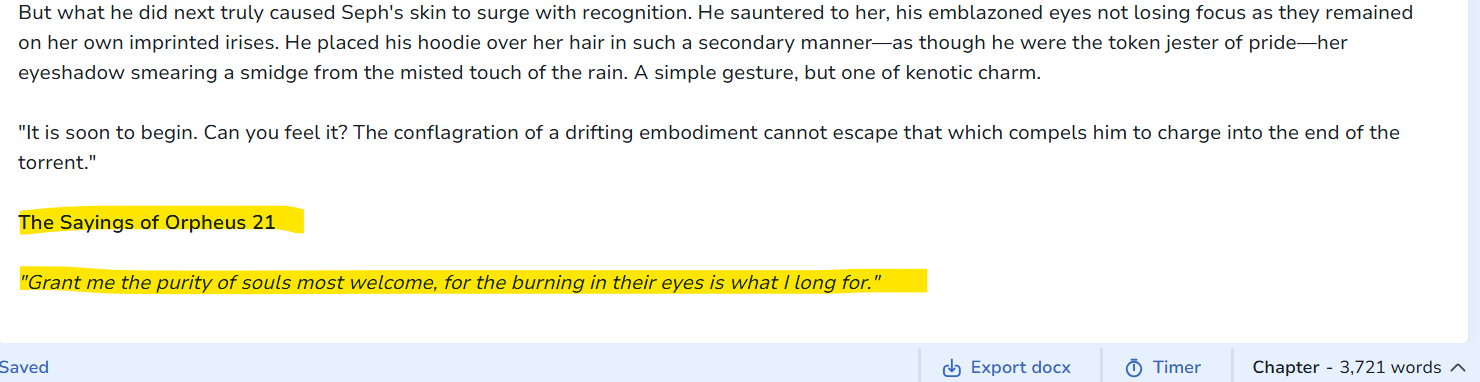
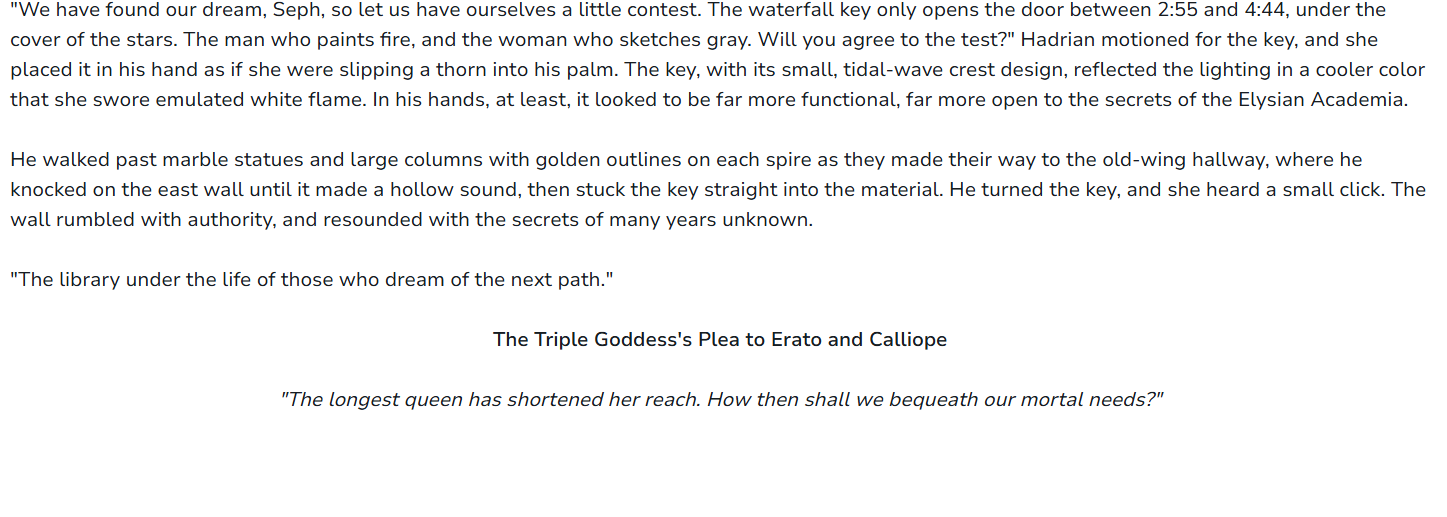
There are branching paths of wisdom of the higher mysteries in the ancient world, and I wanted to explore each one in a romance story built upon the ancient myths through the cycle of Orphism.
In Orphism, life is like the Ouroboros in how the soul proceeds through the journey of lives. The ultimate katharsis of the soul is found when the journey is over after intersectional events through many cycles of reincarnation.
The last section of each chapter brings the characters closer to their liberation from the great cycle of Orphic soul paths.
Careful eyes will see an overarching story in the last paragraphs of each chapter, culminating in the story's climax where ethereal truths are out in the open for all the characters.
Sticking to primary sources is the way to do this, meaning I draw from the traditions while keeping things original. I’m not a fan of taking someone else’s interpretation or work and using that, choosing to make things my own from the primary sources I must work with.
This leads to better stories and original takes, as this is already a retelling of the old myth, and I’m constrained by that pomegranate of truth.
I can’t deviate too much from the original, but I can make an original story using mythology, poetry, and motifs that have given the story staying power throughout the ages.
Using these ancient mystery symbols and understanding how best to use them by crafting the mindset of an initiate into the mysteries leads to better storytelling, as the characters and setting will feel grounded.
In my light-novel series, I use the checker pattern to show the duality of light and darkness (with some references to ska and punk culture, too, but every symbol in my novels is intentional and carefully placed).
In the upcoming duology, I use Greek mythology in such a way that the characters are art students, but ethereal in some ways as well.
To make this work without unraveling the story at the seams, I must carefully distinguish a dreamlike prose construct from the plaintext, giving the story a sort of meta quality.
There is no escape from the memories of heated days in this story, with characters facing ultimate realities as their arcs conclude.
But using mythology in branching ways, switching up the expected for the novel, is the best way to write a story like this.
At its heart, it is a romance novel, but at its foundation, it is an exploration of ancient mysteries only available to the initiates of that ever-elusive flame of knowledge.
How might you explore ancient stories passing through new horizons in your own works?
Happy writing!